 Hamdi Saidani
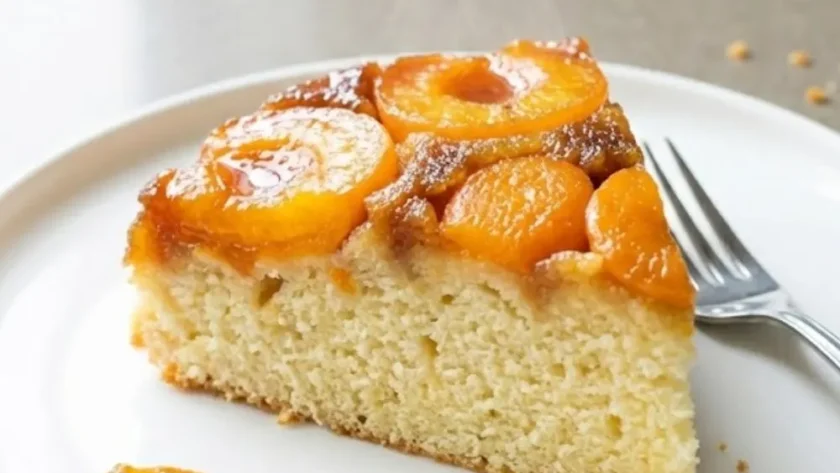
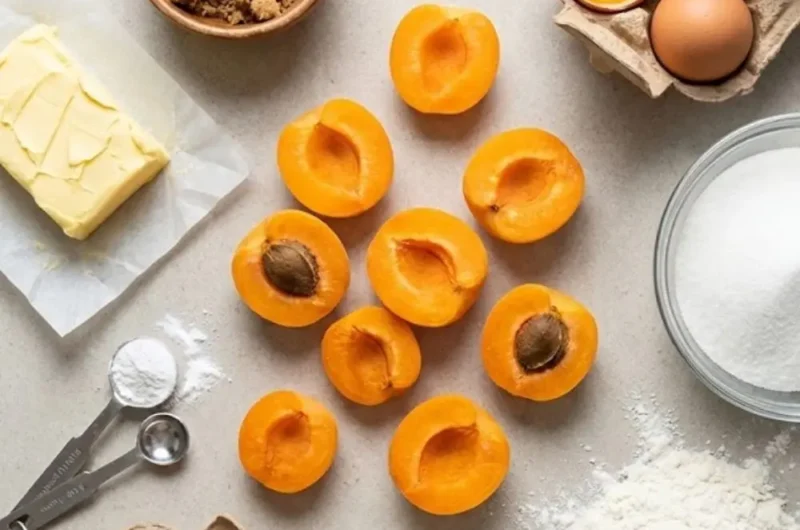
 Mary Berry Apricot Upside Down Cake is a nostalgic and fruity sponge pudding popular for its caramelized fruit topping and light crumb. Ideally, fresh apricots should be used when in season for the best texture, though tinned halves work well in winter if drained thoroughly.
Jump to RecipeMary Berry Apricot Upside Down Cake Ingredients
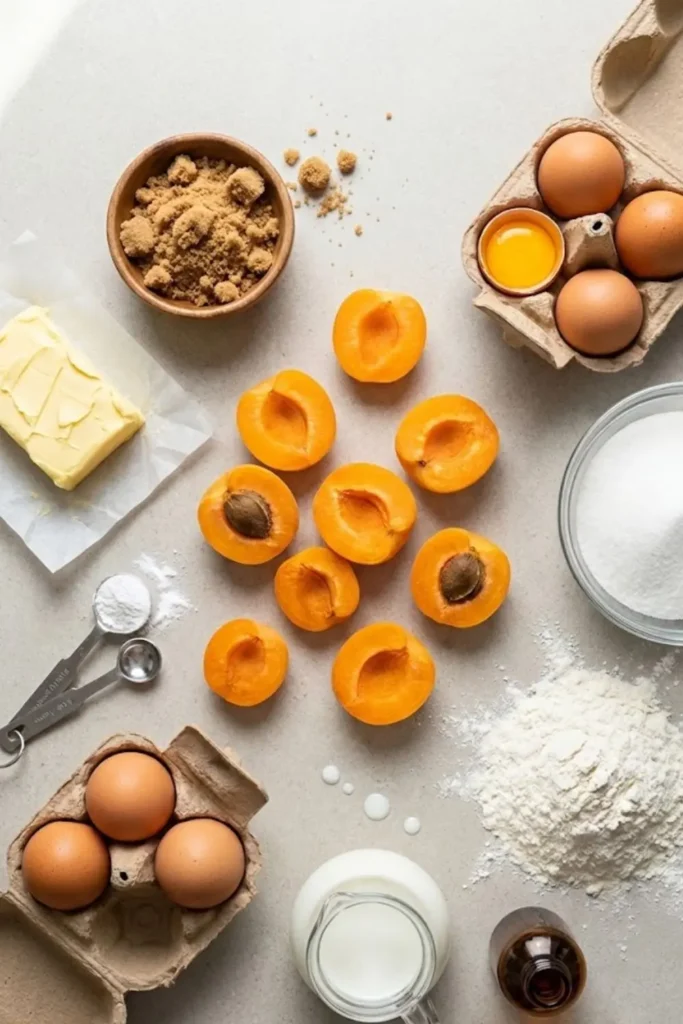
For the Topping
- 50g (2oz) butter, softened
- 50g (2oz) light muscovado sugar (or light brown soft sugar)
- 8–10 fresh apricots, halved and stoned (or 1 x 400g tin apricot halves, drained)
For the Sponge
- 175g (6oz) butter, softened
- 175g (6oz) caster sugar
- 3 large eggs
- 175g (6oz) self-raising flour
- 1 level tsp baking powder
- 1 tbsp milk (if needed to loosen)
- ½ tsp vanilla extract
How To Make Mary Berry Apricot Upside Down Cake
- Prepare the tin: Preheat the oven to 180°C (160°C Fan/Gas 4). Grease a 20cm (8in) round cake tin (fixed base is better than loose-bottomed to prevent leaking) and line the bottom with baking parchment.
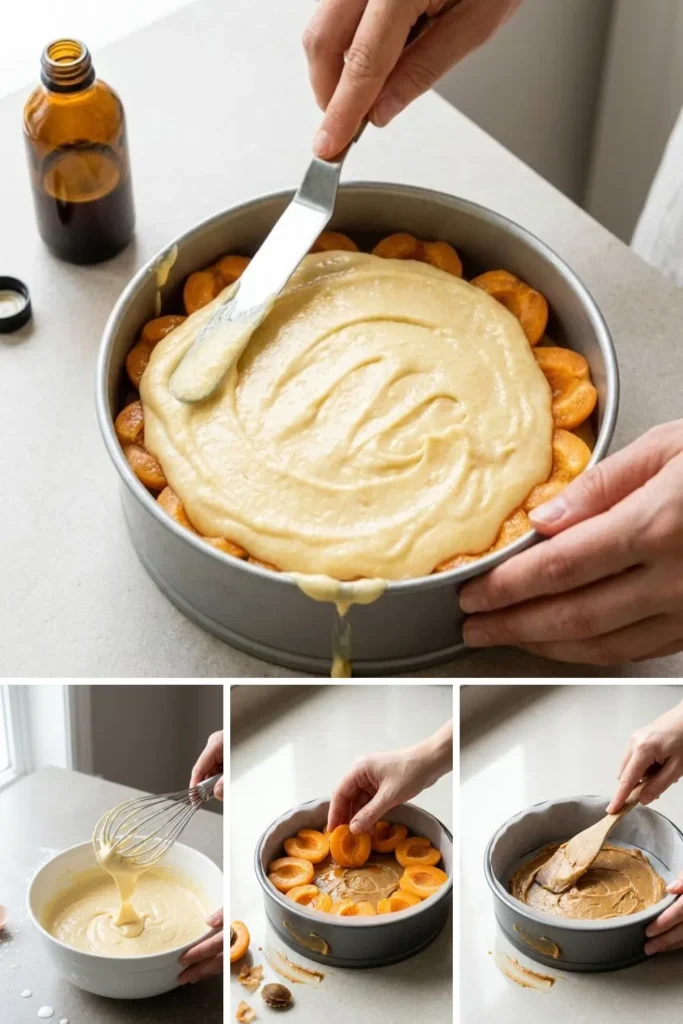
- Make the caramel base: In a small bowl, beat the 50g of softened butter and 50g of light muscovado sugar together until well combined and creamy. Spread this mixture evenly over the base of the lined cake tin.
- Arrange the fruit: Place the apricot halves onto the sugar mixture, cut-side down. Pack them in tightly in a single layer (you can put one in the center and ring the others around it).
- Make the sponge: Measure the sponge ingredients (butter, caster sugar, eggs, flour, baking powder, vanilla) into a large bowl. Using an electric mixer, beat everything together for about 2 minutes until smooth and fluffy. If the batter feels very stiff, add the tablespoon of milk.
- Cover the fruit: Spoon the sponge mixture carefully over the apricots. Use a palette knife to spread it out gently, ensuring you don’t displace the fruit arrangement underneath. Level the top.
- Bake: Bake in the preheated oven for 40–50 minutes. The cake is done when it is well-risen, golden brown, and springs back when pressed lightly in the center. A skewer should come out clean (avoiding the fruit layer).
- Cool and turn out: Leave the cake to cool in the tin for 10 minutes. Run a knife around the edge to loosen it. Place a serving plate on top of the tin and carefully invert the cake so the apricots are on top. Peel off the parchment paper.
- Serve: Serve warm as a pudding or allow to cool completely as a cake.
Recipe Tips
- Tin choice: Do not use a springform tin if possible, as the melting butter and sugar from the base can leak out during baking. A solid tin is safer. If you must use springform, wrap the outside tightly in foil.
- Cut-side down: Placing the apricots cut-side down is crucial. The cut side absorbs the caramelizing sugar, and it ensures the dome of the apricot keeps the sponge moist.
- Using tinned fruit: If using tinned apricots, dry them very well with kitchen paper. Excess syrup will make the sponge soggy.
- Muscovado sugar: Using light brown muscovado sugar for the base gives a lovely toffee flavor and color that contrasts with the pale sponge.
What To Serve With Mary Berry Apricot Upside Down Cake
This versatile bake works as both a cake and a dessert.
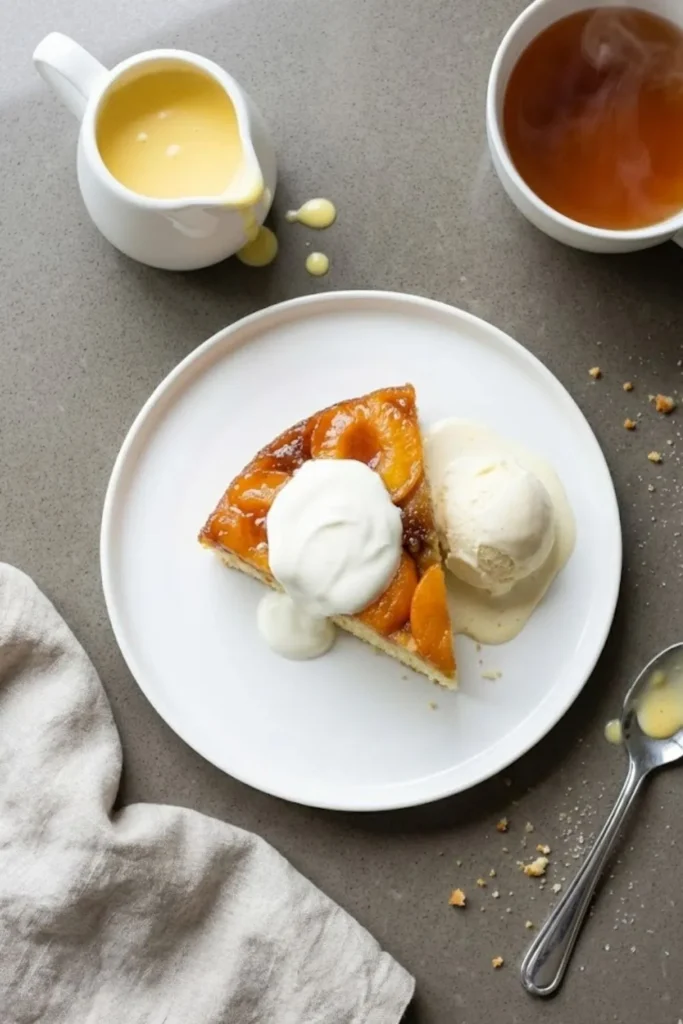
- Crème Fraîche: The slight sourness balances the sweet caramel topping.
- Custard: Hot vanilla custard turns this into a comforting winter pudding.
- Vanilla Ice Cream: A classic pairing for warm cake.
- Afternoon Tea: Serve cold slices with a cup of tea.
How To Store Mary Berry Apricot Upside Down Cake
- Store: Keep the cake in an airtight container at room temperature. It stays moist for up to 3 days.
- Freeze: Wrap the cake well in foil and freeze for up to 3 months. Thaw at room temperature.
Mary Berry Apricot Upside Down Cake Nutrition Facts
- Calories: 310kcal
- Protein: 5g
- Carbohydrates: 38g
- Fat: 16g
- Saturates: 9g
- Sugar: 26g
- Salt: 0.4g
Nutrition information is estimated per slice (based on 8 slices).
FAQs
Can I use other fruits?
Yes, this u0022upside downu0022 method works perfectly with pineapple rings (and glacé cherries), sliced pears, or plums.
Why is my sponge dense?
If the sponge is heavy, you may have over-mixed the batter (knocking out the air) or the butter wasn’t soft enough to emulsify properly.
Can I use plain flour?
If using plain flour, add 2 level teaspoons of baking powder (total) to ensure the sponge rises enough to cover the fruit.
Try More Recipes:
- Mary Berry Lemon Bundt Cake Recipe
- Mary Berry Lemon Yoghurt Cake Recipe
- Mary Berry Boiled Fruit Cake In Air Fryer Recipe
Mary Berry Apricot Upside Down Cake Recipe
Course: DessertCuisine: BritishDifficulty: Easy8
servings20
minutes45
minutes310
kcalA classic sponge pudding featuring a layer of caramelized fresh apricots that are revealed when the cake is turned out after baking.
Ingredients
Topping: 50g butter, 50g light muscovado sugar, 8 apricots
Sponge: 175g butter, 175g caster sugar, 3 eggs, 175g self-raising flour, 1 tsp baking powder, vanilla
Directions
- Cream 50g butter and muscovado sugar; spread on tin base.
- Arrange apricot halves cut-side down on the sugar mix.
- Beat remaining butter, sugar, eggs, flour, and baking powder until smooth.
- Spread batter over apricots.
- Bake at 180°C for 40–50 minutes.
- Cool for 10 minutes, then invert onto a plate.
- Serve warm or cold.
Notes
- Spreading the butter and sugar paste on the bottom of the tin rather than just melting it ensures it stays in place while you arrange the fruit and creates a thicker caramel layer.
- Allowing the cake to rest for 10 minutes before turning it out is essential; if you turn it out too soon, the sponge may break, but if you leave it too long, the caramel will set and stick to the tin.
- If using fresh apricots, the skin softens beautifully during baking, so there is no need to peel them beforehand.