 Hamdi Saidani
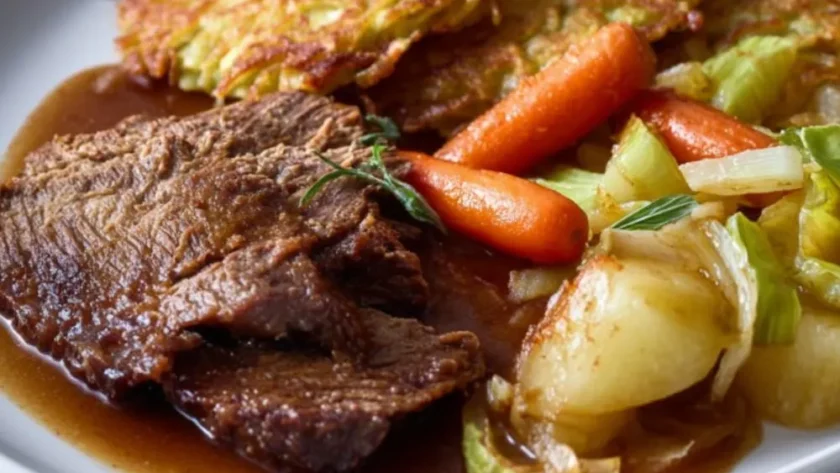
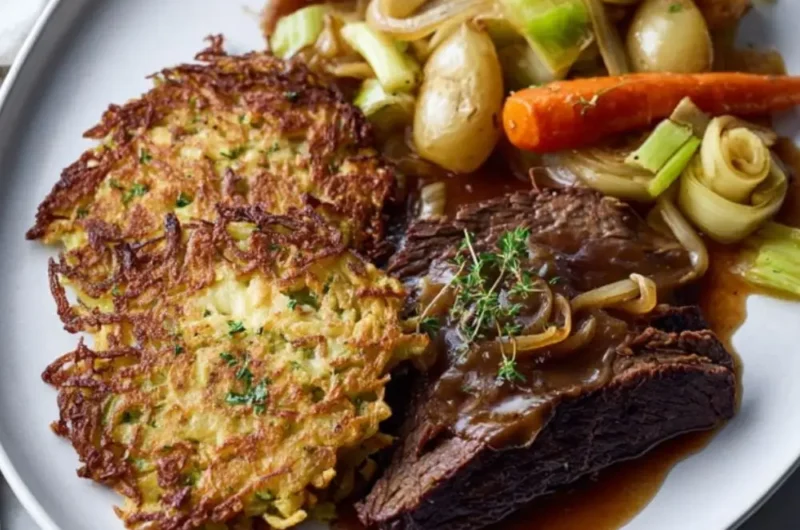
 This Mary Berry Beef Brisket Recipe is a tender and succulent recipe, which features slow-cooked beef brisket and crisp potato latkes. It’s the perfect Sunday roast alternative, ready in about 5 hours.
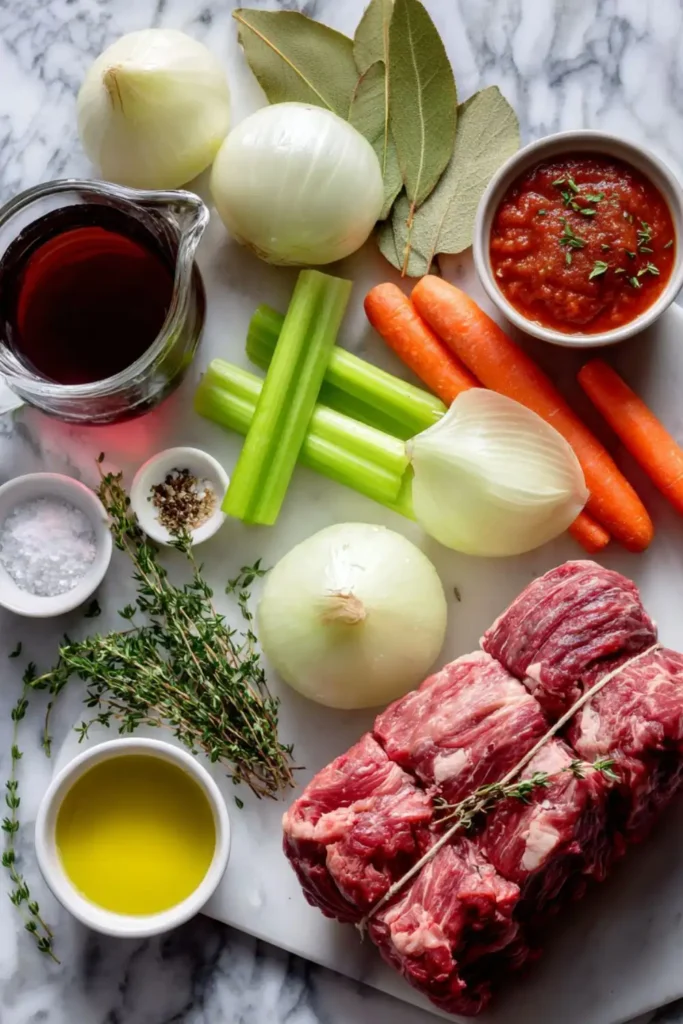
Jump to RecipeMary Berry Beef Brisket Recipe Ingredients
For the Beef Brisket:
- 1.2kg (2lb 12oz) well-marbled beef brisket, rolled and tied
- 4–5 tbsp sunflower oil
- 4 onions (2 thinly sliced, 2 quartered)
- 3 sprigs bushy thyme
- 1 large bay leaf
- 2 tbsp tomato purée
- 500ml (18fl oz) hot beef stock
- 200ml (7fl oz) red wine
- 4 large carrots, cut into chunks
- 6 celery sticks, cut into lengths
- Sea salt and freshly ground black pepper
For the Potato Latkes:
- 1 free-range egg
- 1 free-range egg yolk
- 1 large onion, grated
- 1.2kg (2lb 12oz) potatoes (Maris Piper preferred), grated
- 25g (1oz) plain flour
- 1 tsp flaked sea salt
- 2 tbsp finely chopped fresh parsley or chives (optional)
- 6 tbsp sunflower oil, for frying
How To Make Mary Berry Beef Brisket Recipe
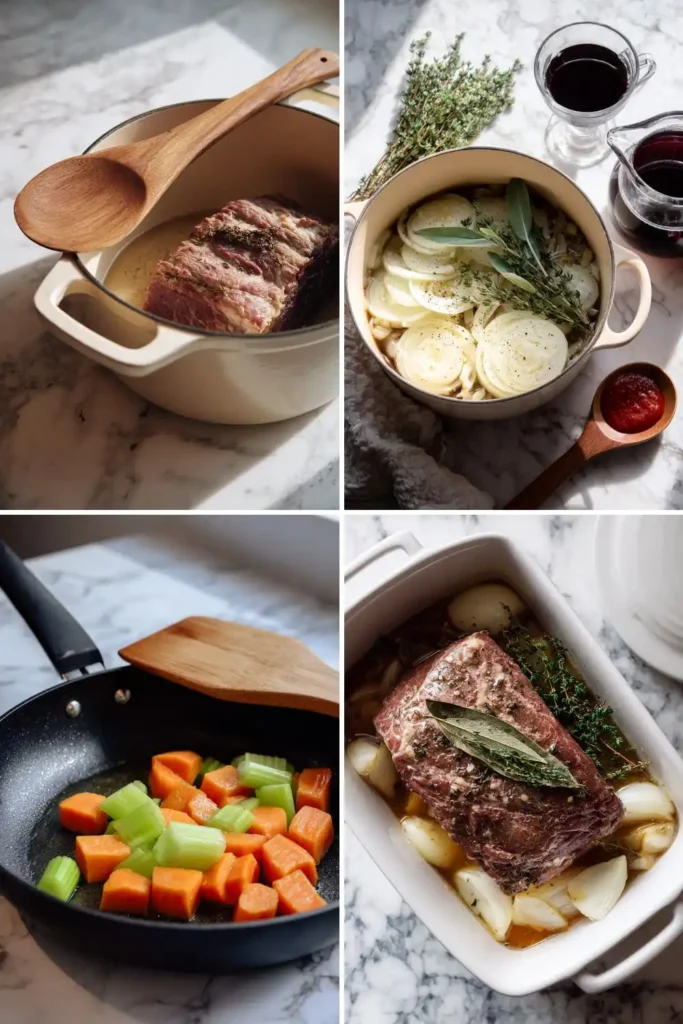
- Brown the beef: Preheat the oven to 160°C / 140°C Fan / Gas 3. Season the brisket all over with salt and pepper. Heat 2 tablespoons of oil in a large flameproof casserole dish. Brown the beef over high heat for 8–10 minutes, turning until sealed and colored on all sides. Remove beef and set aside.
- Start the braise: Add the sliced onions to the casserole and fry for 5 minutes until browned. Stir in the thyme and bay leaf. Return the beef to the pot. Stir the tomato purée into the hot stock and pour it around the beef along with the red wine. Bring to a simmer, cover with a lid, and cook in the oven for 3 hours (turn the beef halfway through).
- Prepare the vegetables: While the beef cooks, heat another tablespoon of oil in a frying pan. Fry the quartered onions for 5 minutes. Add the carrots and celery chunks and cook for another 5 minutes until lightly browned.
- Finish the roast: Remove the beef from the oven. Nestle the browned vegetables around the meat. Cover and return to the oven for a further 1–2 hours, or until the beef is tender and falling apart.
- Make the latke mixture: Whisk the egg and yolk in a bowl. Place the grated onion and potato in a clean tea towel or colander and squeeze out as much liquid as humanly possible. Transfer the dry vegetables to a bowl. Add the eggs, flour, salt, pepper, and herbs. Mix well.
- Fry the latkes: Heat 2 tablespoons of oil in a non-stick pan over low-medium heat. Form a handful of the mixture into a ball, place in the pan, and flatten to 1.5cm thick. Fry for 6–8 minutes on each side until golden and cooked through. Do not rush this with high heat, or the middle will be raw. Repeat with remaining mixture.
- Serve: Turn the oven up to 200°C / 180°C Fan to reheat the latkes for 10 minutes before serving. Lift the beef out, carve into thick slices, and serve with the vegetables, latkes, and the rich cooking liquor gravy.
Recipe Tips
- Squeezing the Potatoes: The secret to crispy latkes is removing moisture. If the potatoes are wet, they will steam instead of fry and become soggy. Squeeze them until your hands hurt!
- The Cut: Brisket needs fat to stay moist during a 5-hour cook. Ask your butcher for a “well-marbled” piece. The fat will render down into the sauce, creating a rich gravy.
- Don’t Rush the Latkes: Latkes are dense potato cakes. If the heat is too high, the outside will burn before the raw potato in the center is cooked. Low and slow frying is key.
- Make Ahead: Brisket tastes even better the next day. You can cook the meat fully, slice it cold, and reheat it in the gravy.
What To Serve With Mary Berry Beef Brisket
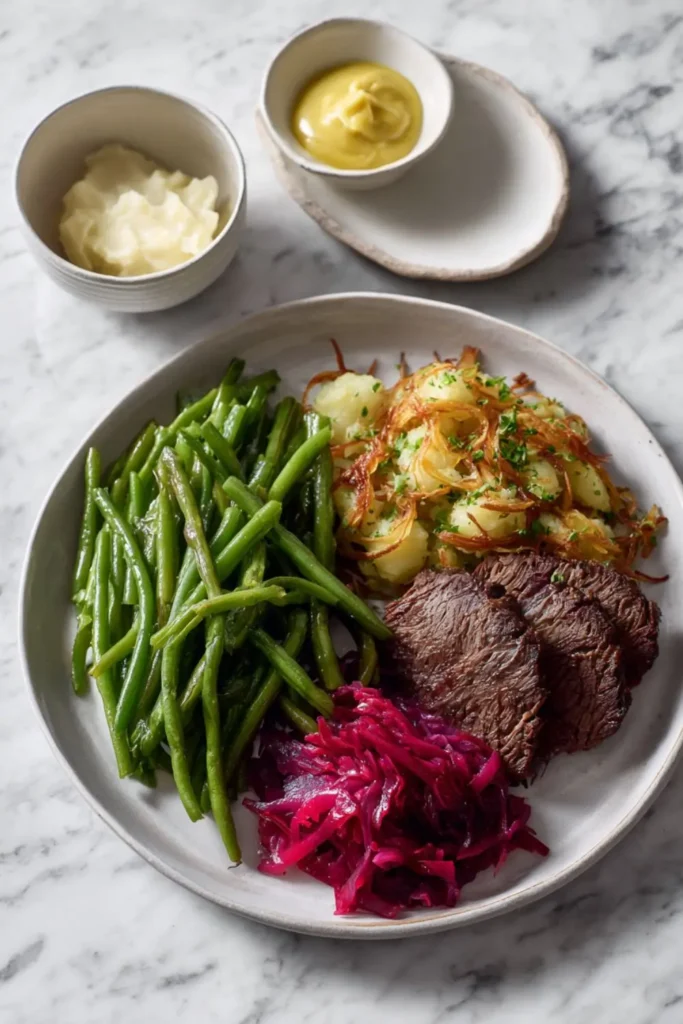
This meal is very rich, so simple green sides work best.
- Steamed Green Beans: Or tenderstem broccoli.
- Horseradish Sauce: A classic beef pairing.
- Mustard: English mustard for a kick.
- Pickled Red Cabbage: Cuts through the rich fat.
How To Store Mary Berry Beef Brisket Recipe
- Refrigerate: Store the beef in its gravy in an airtight container for up to 3-4 days. Store latkes separately; they can be re-crisped in the oven.
- Freeze: The brisket freezes beautifully in the sauce for up to 3 months. Latkes can also be frozen and reheated from frozen in the oven.
Mary Berry Beef Brisket Recipe Nutrition Facts
- Calories: 650
- Total Fat: 35g
- Saturated Fat: 10g
- Cholesterol: 115mg
- Sodium: 800mg
- Total Carbohydrates: 45g
- Dietary Fiber: 6g
- Sugar: 12g
- Protein: 40g
Nutrition information is estimated per serving based on 6 servings.
FAQs
Can I make this in a slow cooker?
Yes. Brown the meat and onions as directed, then transfer everything to a slow cooker. Cook on Low for 8-9 hours. Add the root vegetables in the last 2 hours so they don’t turn to mush.
Why are my latkes soggy?
Either the potatoes weren’t squeezed dry enough, or the oil wasn’t hot enough when they went in (allowing them to absorb grease), or the pan was overcrowded.
Do I have to use wine?
No, you can replace the red wine with extra beef stock or a non-alcoholic wine substitute, though the wine adds a deep richness to the gravy.
Try More Recipes:
- Mary Berry Green Tomato Chutney Recipe
- Mary Berry Chilli Con Carne Recipe
- Mary Berry Mexican Bake Recipe
Mary Berry Beef Brisket Recipe
Course: DinnerCuisine: BritishDifficulty: Easy6
servings40
minutes5
hours650
kcalA warming slow-cooked beef brisket braised in red wine and stock, served with crispy homemade potato and onion latkes.
Ingredients
1.2kg beef brisket
4 onions
4 carrots
6 celery sticks
500ml beef stock
200ml red wine
2 tbsp tomato purée
Latkes: 1.2kg potatoes, 1 onion, 2 eggs, 25g flour, oil.
Directions
- Preheat oven to 160°C. Brown seasoned brisket in oil. Remove.
- Fry sliced onions; add herbs. Return beef.
- Add purée, stock, and wine. Cover and cook 3 hours.
- Fry quartered onions, carrots, and celery. Add to pot.
- Cook further 1-2 hours until tender.
- Latkes: Squeeze grated potato/onion dry. Mix with egg, flour, seasoning.
- Fry patties 6-8 mins/side. Re-crisp in hot oven before serving.
- Slice beef and serve with veg and latkes.
Notes
- Timing: Start the latkes while the beef is in its final hour of cooking so everything is ready together.
- Carving: Brisket can be stringy if not carved correctly; slice across the grain for the most tender bite.