 Hamdi Saidani
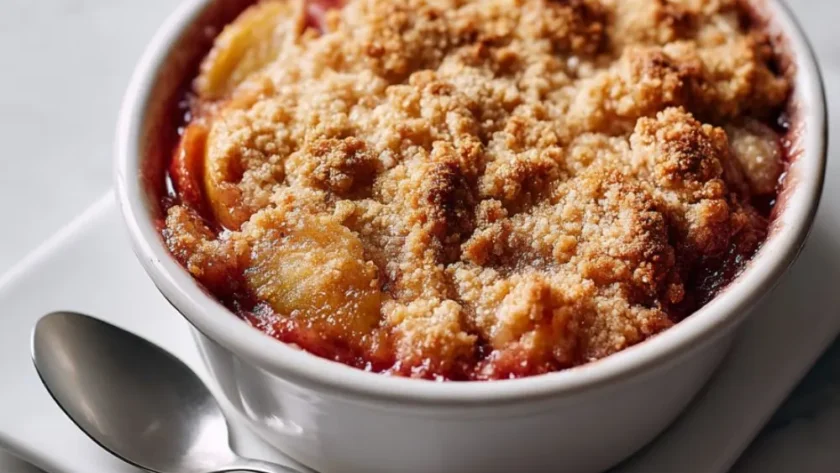
 Mary Berry Fruit Cobbler is made with a comforting base of stewed plums and bramley apples, topped with golden, biscuit-like scone rounds. Unlike American cobblers that use a wet batter, Mary’s British version uses a rubbed-in dough that rises into fluffy, tender “cobbles” with a crunchy demerara sugar crust. It is the perfect warming dessert for autumn days, bridging the gap between a crumble and a pie.
Jump to RecipeMary Berry Fruit Cobbler Ingredients
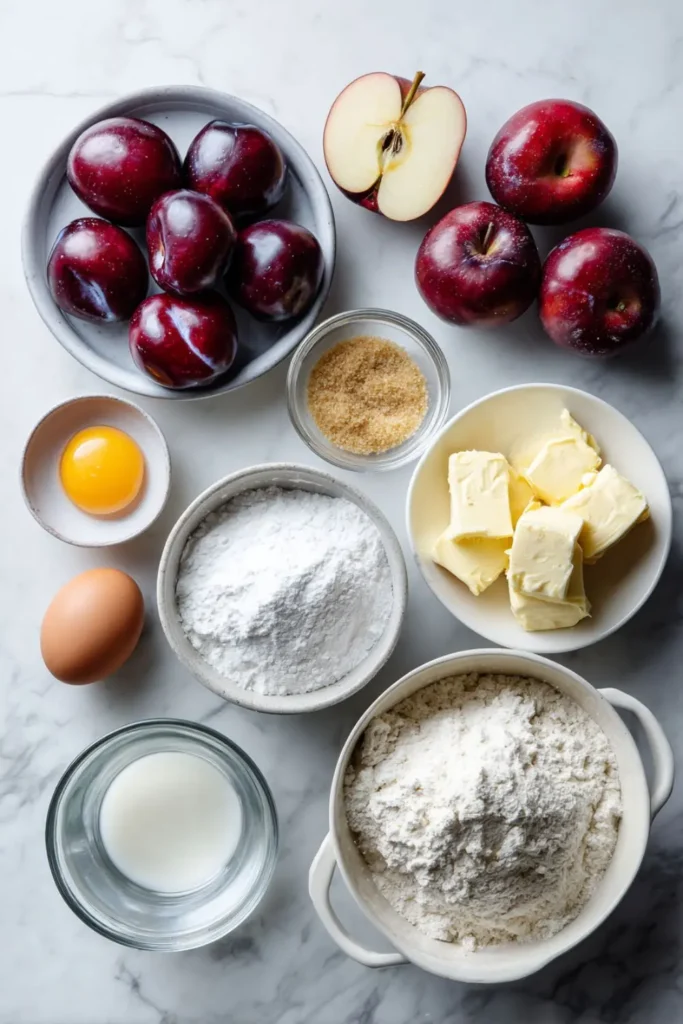
For the Fruit Base
- 900g (2 lb) Plums: Halved and stoned. (Red or Victoria plums work best).
- 500g (1 lb 2 oz) Cooking Apples: (Bramley). Peeled, cored, and sliced.
- 100g (4 oz) Granulated Sugar: Sweetens the tart fruit.
- 2 tbsp Water: To help steam the fruit.
For the Cobbler Topping
- 225g (8 oz) Self-Raising Flour: Sifted. Essential for the lift.
- 1 tsp Baking Powder: Gives extra lightness to the scones.
- 50g (2 oz) Butter: Cold and cubed.
- 50g (2 oz) Granulated Sugar: For the dough.
- 1 Large Egg: Beaten.
- 4-5 tbsp Milk: To bind the dough.
- Demerara Sugar: For sprinkling on top to create a crunch.
How To Make Mary Berry Fruit Cobbler
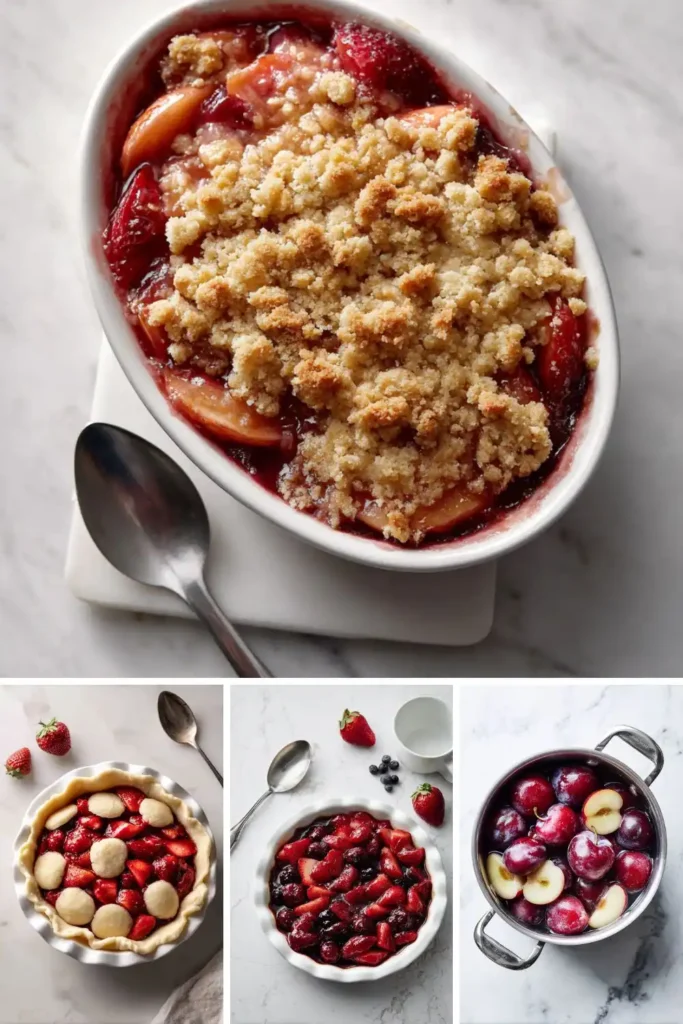
- Prepare the Fruit: Preheat the oven to 200°C (400°F/Gas 6). Place the prepared plums, sliced apples, sugar, and water into a large saucepan.
- Stew Briefly: Cover the pan and simmer gently over low heat for about 10 minutes. The fruit should be just beginning to soften but still hold its shape. (Pre-cooking prevents the topping from burning before the fruit is tender).
- Transfer: Tip the hot fruit mixture (including the juices) into a shallow ovenproof pie dish (approx. 1.5 – 2 litre capacity).
- Make the Dough: Measure the self-raising flour and baking powder into a large bowl. Add the cold cubed butter.
- Rub In: Use your fingertips to rub the butter into the flour until the mixture resembles fine breadcrumbs. Stir in the 50g of granulated sugar.
- Bind: Beat the egg with 3 tablespoons of the milk. Pour this into the flour mixture and mix with a round-bladed knife. Add the remaining milk gradually until you have a soft, pliable dough (similar to scone dough).
- Roll and Cut: Turn the dough onto a lightly floured surface and knead very gently just to smooth it. Roll out to approx. 1cm (½ inch) thickness. Use a 5cm (2 inch) cutter to stamp out rounds.
- Assemble: Arrange the dough rounds over the hot fruit, slightly overlapping them if necessary to fit, though gaps are fine (they allow steam to escape).
- Glaze and Bake: Brush the tops of the cobbles with a little extra milk and sprinkle generously with demerara sugar. Bake in the oven for 20–25 minutes until the topping is well risen and golden brown.
- Serve: Serve hot straight from the oven.
Recipe Tips
- Don’t Overwork the Dough: Just like making scones, handle the dough as little as possible. If you knead it heavily, the gluten develops and the cobbles will be tough and chewy instead of light.
- Hot Fruit is Key: Putting the dough rounds onto hot fruit helps the bottom of the cobbles start cooking immediately, preventing them from becoming soggy.
- Fruit Variations: You can use almost any seasonal fruit. Apricot and raspberry is a favorite Mary Berry alternative, or simple apple and blackberry.
- Cutter Size: If you don’t have a cutter, you can simply shape the dough into rough balls with your hands for a more rustic look.
What To Serve With Mary Berry Fruit Cobbler?
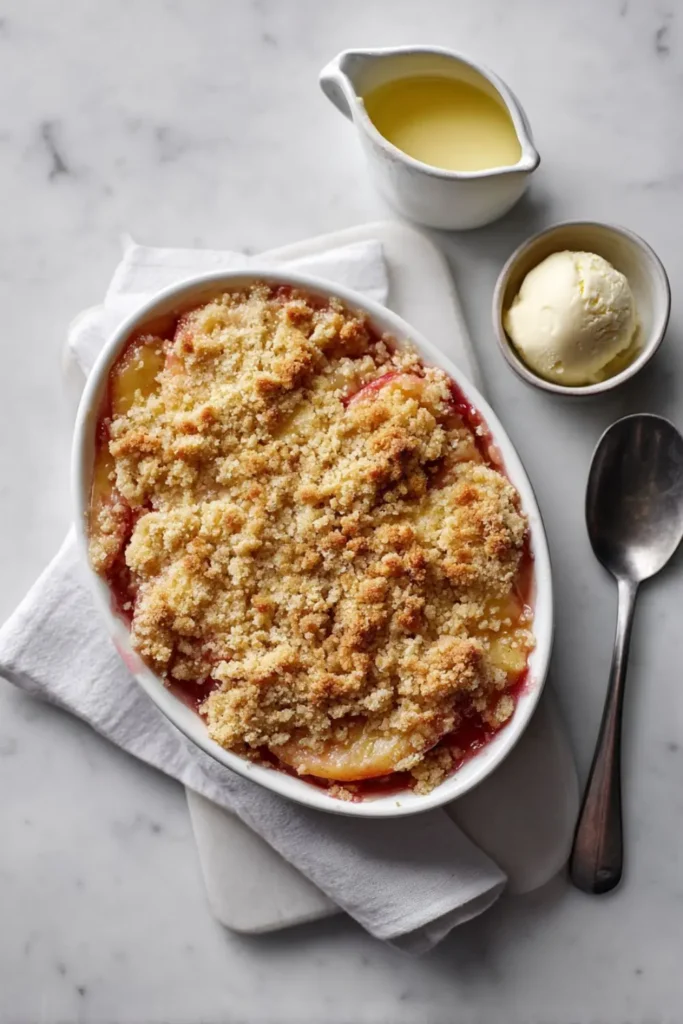
This dessert is best served warm with creamy sides.
- Hot Custard: The traditional British pairing.
- Vanilla Ice Cream: Creates a hot/cold contrast.
- Clotted Cream: For an extra indulgent treat.
How To Store Leftovers Mary Berry Fruit Cobbler
- Refrigerate: Store leftovers covered in the fridge for up to 3 days. The topping may soften slightly.
- Reheat: Reheat in the oven at 180°C for 10-15 minutes to crisp up the topping. Microwaving will make the topping chewy.
- Freeze: You can freeze the cooked cobbler. Thaw thoroughly before reheating.
Mary Berry Fruit Cobbler Nutrition Facts
- Calories: ~380 kcal
- Fat: 9g
- Carbohydrates: 65g
- Protein: 6g
Nutrition information is estimated per serving (serves 6).
FAQs
Can I use plain flour?
If you use plain flour, you must add 3 teaspoons of baking powder to ensure the cobbles rise.
Why is my topping hard?
The topping becomes hard if the dough was overworked or if there wasn’t enough liquid added. The dough should be soft and slightly sticky, not dry.
Can I use canned fruit?
Yes, you can use canned peaches or apricots. Drain them well and skip the u0022stewingu0022 step as they are already soft.
Try More Recipes:
- Mary Berry Fruit Scones Recipe
- Mary Berry Pineapple Fruit Cake Recipe
- Mary Berry Boiled Fruit Cake Recipe
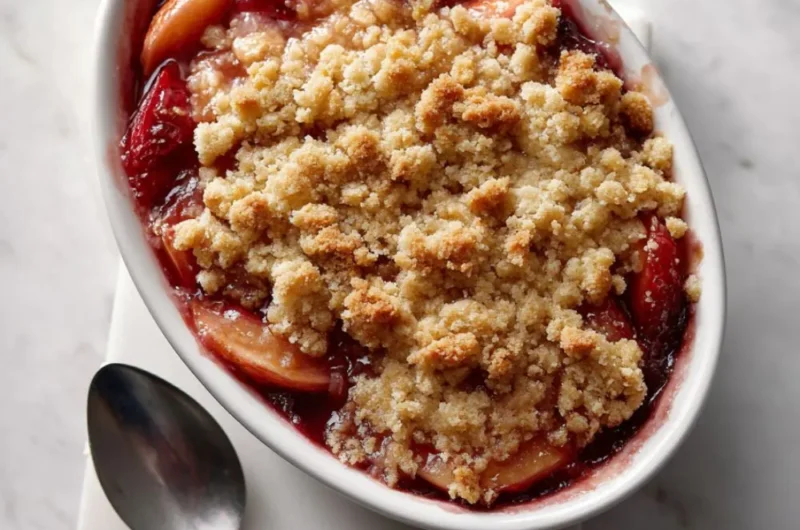
Mary Berry Fruit Cobbler Recipe
Course: DessertCuisine: BritishDifficulty: Easy6
servings20
minutes25
minutes380
kcalA classic British autumnal dessert featuring tender stewed plums and apples beneath a fluffy, scone-like crust.
Ingredients
- Fruit:
900g plums, halved and stoned
500g cooking apples, peeled and sliced
100g granulated sugar
2 tbsp water
- Topping:
225g self-raising flour
1 tsp baking powder
50g cold butter
50g granulated sugar
1 egg, beaten
4-5 tbsp milk
Demerara sugar (for sprinkling)
Directions
- Stew Fruit: Simmer plums, apples, sugar, and water in a pan for 10 mins.
- Dish Up: Transfer hot fruit to a pie dish.
- Rub In: Rub butter into flour and baking powder. Stir in sugar.
- Make Dough: Mix in egg and milk to form a soft dough.
- Cut: Roll out dough and cut into rounds.
- Top: Place rounds on hot fruit. Brush with milk and sprinkle with demerara.
- Bake: Bake at 200°C (400°F) for 20-25 mins until golden.
Notes
- Pre-cooking the apples ensures they are tender by the time the biscuit topping is golden brown.
- Using self-raising flour is essential for the cobbles to rise and become fluffy.
- Placing the dough on top of the hot fruit prevents the underside of the cobbles from becoming soggy.