 Hamdi Saidani
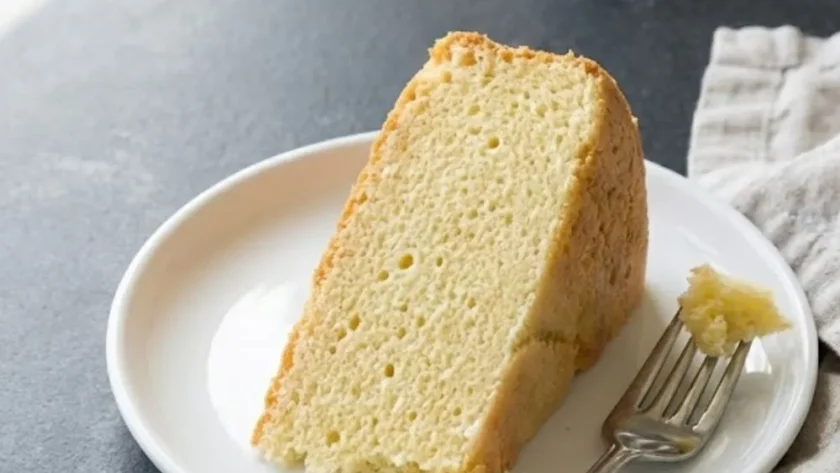
 This Mary Berry Genoise Sponge is a feather-light and airy recipe, which uses the foaming method of whisking eggs and sugar to create volume. It is the classic base for gateaux, filled with fresh fruit and cream, ready in about 45 minutes.
Jump to RecipeMary Berry Genoise Sponge Ingredients
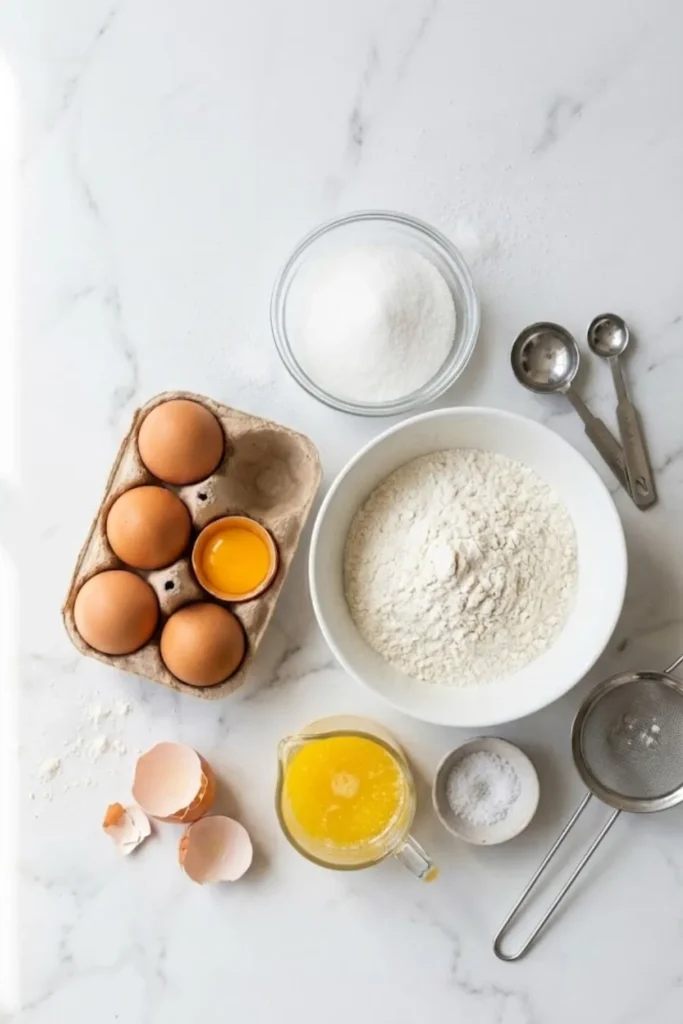
- 4 large eggs (at room temperature)
- 125g (4½oz) caster sugar
- 125g (4½oz) plain flour
- 60g (2¼oz) unsalted butter, melted and cooled
- Pinch of salt
How To Make Mary Berry Genoise Sponge
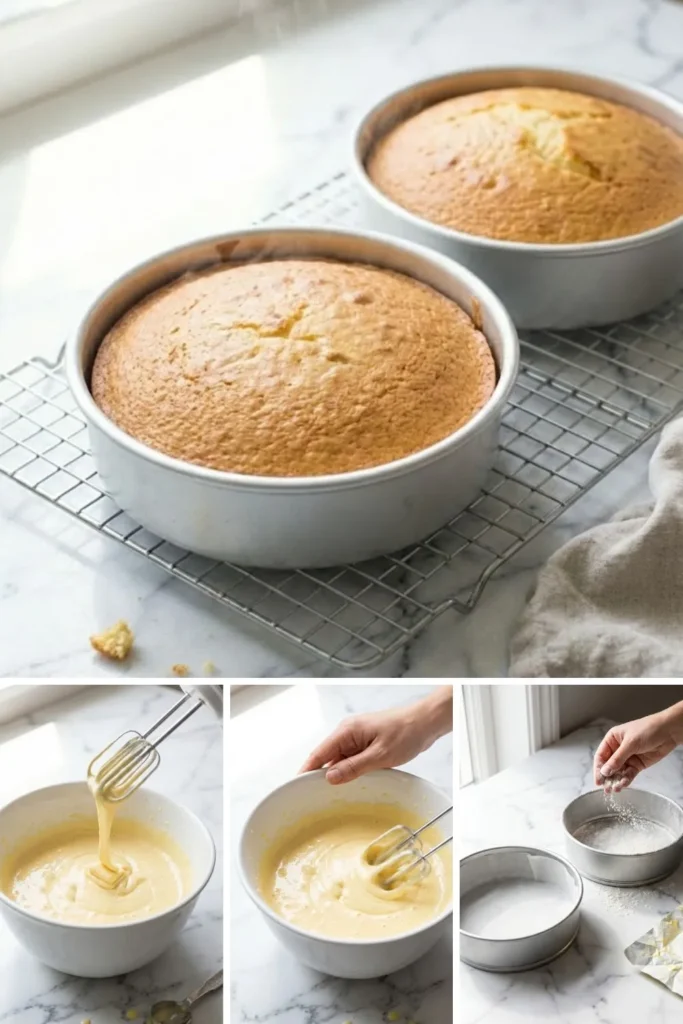
- Prep the tins: Preheat the oven to 190°C (170°C Fan/Gas 5). Grease two 20cm (8in) round sandwich tins and line the bases with baking parchment. Dust the sides with a little flour and shake out the excess.
- Melt the butter: Melt the butter in a small pan or in the microwave. Set it aside to cool slightly. It needs to be liquid but not piping hot, or it will scramble the eggs.
- Whisk eggs and sugar: Break the eggs into a large heatproof bowl and add the caster sugar. Using an electric hand whisk (or stand mixer), whisk on high speed for about 5–7 minutes. The mixture should become pale, thick, and mousse-like.
- Check for the ribbon: Stop the whisk and lift the beaters. The mixture should fall back into the bowl in a thick trail that sits on the surface for a few seconds before sinking. This is known as the “ribbon stage.”
- Fold in the flour: Sift half of the flour (and salt) over the egg mixture. Using a large metal spoon or spatula, gently fold the flour in, cutting through the center and lifting the mixture over. Sift in the remaining flour and fold again until just combined. Be very gentle to keep the air in.
- Add the butter: Pour the cooled melted butter around the edge of the mixture. Quickly and gently fold it in until just incorporated. Do not over-mix, or the sponge will lose volume and become heavy.
- Bake: Divide the mixture evenly between the two prepared tins. Bake for 20–25 minutes.
- Cool: The sponges are done when they are golden brown, have shrunk slightly from the sides of the tin, and spring back when lightly pressed. Turn out onto a wire rack to cool completely.
Recipe Tips
- Room temperature eggs: Cold eggs take much longer to whisk to the ribbon stage. Ensure your eggs are at room temperature to get maximum volume.
- The metal spoon: Mary Berry always recommends using a large metal spoon for folding flour into a fatless or Genoise sponge. The thin edge of the metal cuts through the foam cleanly without knocking out the air bubbles like a thick wooden spoon would.
- Butter temperature: If the butter is too hot, the batter will collapse. If it is too cold and starts to solidify, it will create heavy streaks. It should be tepid.
- Sifting is key: You must sift the flour to aerate it. If you dump heavy lumps of flour onto the delicate egg foam, it will sink to the bottom.
What To Serve With Mary Berry Genoise Sponge
This sponge is drier than a Victoria sponge and is designed to be soaked with syrup or filled with moisture.
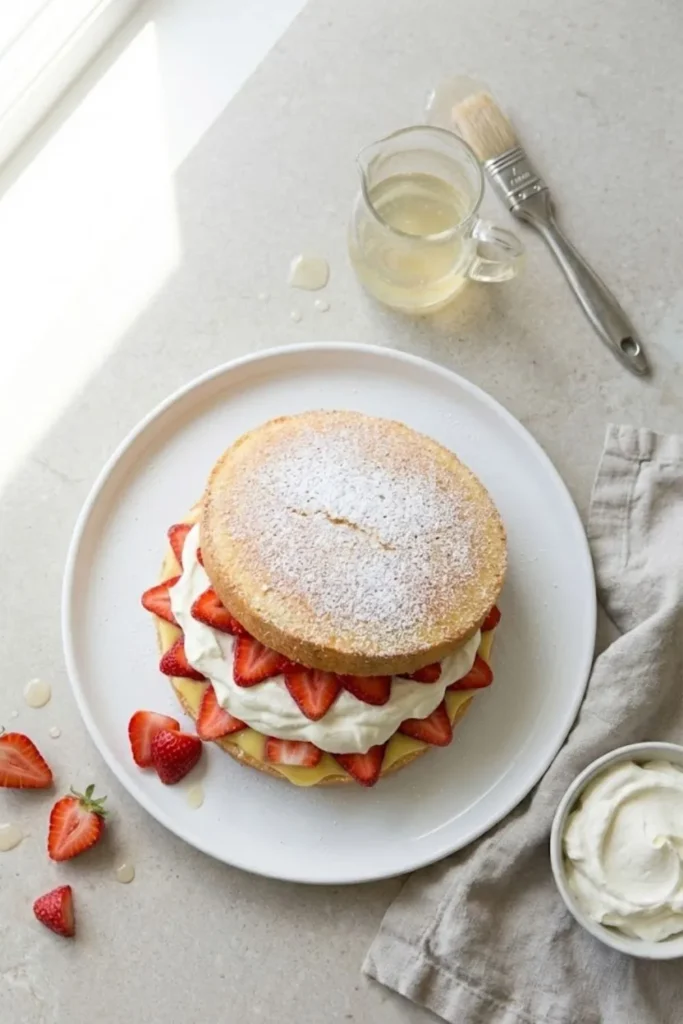
- Strawberries and Cream: The classic “Victoria” style filling.
- Sugar Syrup: Brush with lemon or vanilla syrup to keep it moist.
- Crème Pâtissière: A rich custard filling for a Fraisier cake.
- Chocolate Mousse: Use as layers in a chocolate gateau.
How To Store Mary Berry Genoise Sponge
- Store: Once cool, store in an airtight container for up to 2 days. Genoise stales faster than butter cakes because it has less fat.
- Freeze: Wrap the sponges individually in cling film and foil. Freeze for up to 1 month. Thaw at room temperature.
Mary Berry Genoise Sponge Nutrition Facts
- Calories: 190kcal
- Protein: 5g
- Carbohydrates: 26g
- Fat: 8g
- Saturates: 4g
- Sugar: 16g
- Salt: 0.1g
Nutrition information is estimated per slice (based on 8 slices).
FAQs
Why is my sponge flat?
This usually happens for two reasons: either the eggs weren’t whisked enough to hold the structure, or the flour/butter was folded in too roughly, knocking all the air out.
Why is the texture rubbery?
A rubbery texture is a sign of over-mixing after adding the flour. Once the flour is added, the gluten begins to develop. Fold only until the flour disappears.
Can I use self-raising flour?
A traditional Genoise uses plain flour and relies entirely on the eggs for the rise. However, Mary Berry sometimes uses self-raising flour in her u0022fatless spongeu0022 recipes for extra insurance. If you are nervous about the folding, you can use self-raising flour.
Try More Recipes:
- Mary Berry Joconde Sponge Recipe
- Mary Berry Apple Sponge Cake Recipe
- Mary Berry Chocolate Sponge Cake Recipe
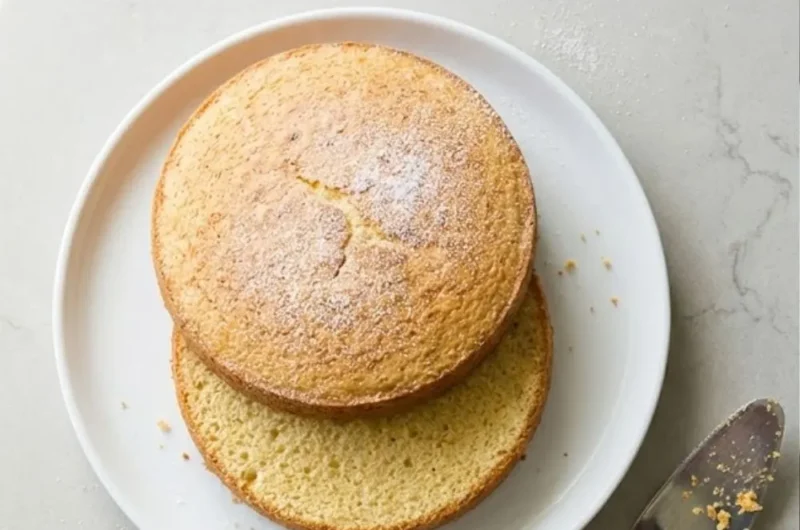
Mary Berry Genoise Sponge Recipe
Course: DessertCuisine: FrenchDifficulty: Easy8
servings20
minutes25
minutes190
kcalA classic continental sponge cake made by whisking eggs and sugar to a mousse, resulting in a delicate, airy texture perfect for layered gateaux.
Ingredients
4 large eggs
125g caster sugar
125g plain flour
60g unsalted butter, melted
Directions
- Preheat oven to 190°C and grease/line two cake tins.
- Melt butter and allow it to cool to tepid.
- Whisk eggs and sugar on high speed for 5–7 minutes until thick and pale (ribbon stage).
- Sift flour over the mixture in two batches, folding gently with a metal spoon.
- Pour melted butter around the edge and fold in quickly.
- Divide between tins and bake for 20–25 minutes.
- Cool on a wire rack.
Notes
- Unlike a Victoria sponge where ingredients are beaten together, this sponge relies entirely on the air trapped in the eggs for its rise, so the folding technique must be extremely gentle.
- Pouring the melted butter around the edges of the bowl rather than directly into the center helps prevent it from sinking straight to the bottom and deflating the egg foam.
- This sponge is naturally drier than butter cakes, which makes it the ideal vessel for absorbing fruit syrups, liqueurs, or jams without becoming soggy.