 Hamdi Saidani
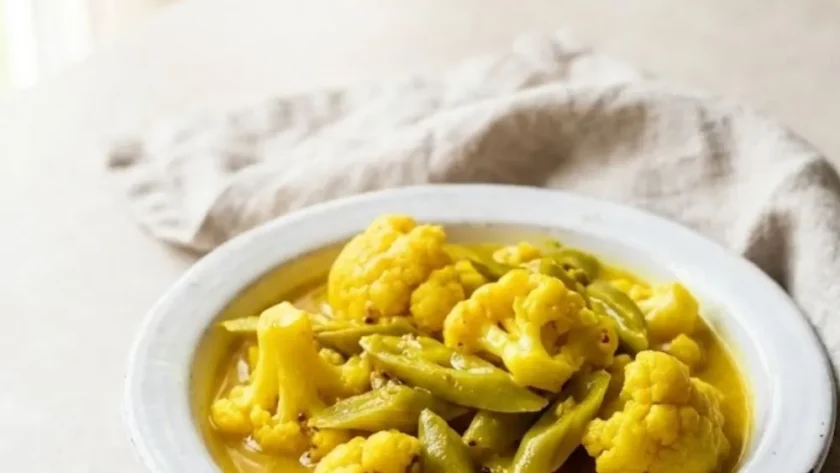
 This Mary Berry Piccalilli is a crunchy and vibrant recipe, which features florets of cauliflower and crisp runner beans. It’s the ultimate accompaniment to cold meats, ready in about 45 minutes (plus overnight salting).
Jump to RecipeMary Berry Piccalilli Ingredients
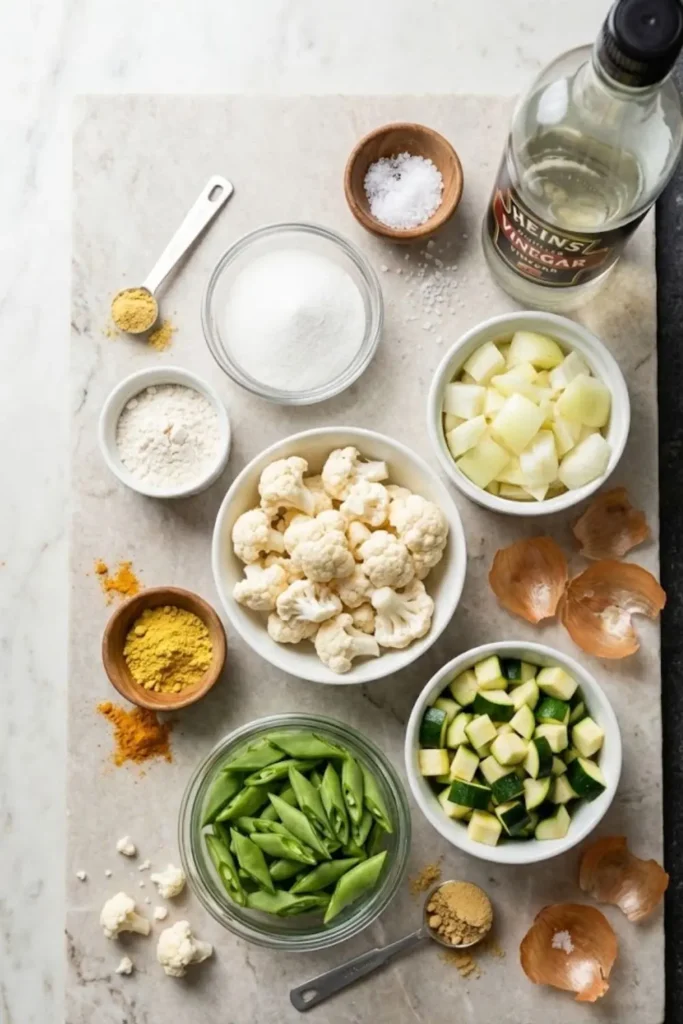
For the Vegetables
- 1 large cauliflower (approx. 750g), broken into small florets
- 450g (1lb) onions, peeled and chopped into 1cm chunks
- 250g (9oz) runner beans (or French beans), sliced diagonally
- 250g (9oz) courgettes (zucchini), diced (optional, or use cucumber)
- 50g (2oz) salt (for brining)
For the Sauce
- 900ml (1½ pints) distilled malt vinegar (white vinegar keeps the color bright)
- 450g (1lb) granulated sugar
- 50g (2oz) plain flour
- 25g (1oz) mustard powder (English mustard)
- 25g (1oz) ground turmeric
- 2 tsp ground ginger
How To Make Mary Berry Piccalilli
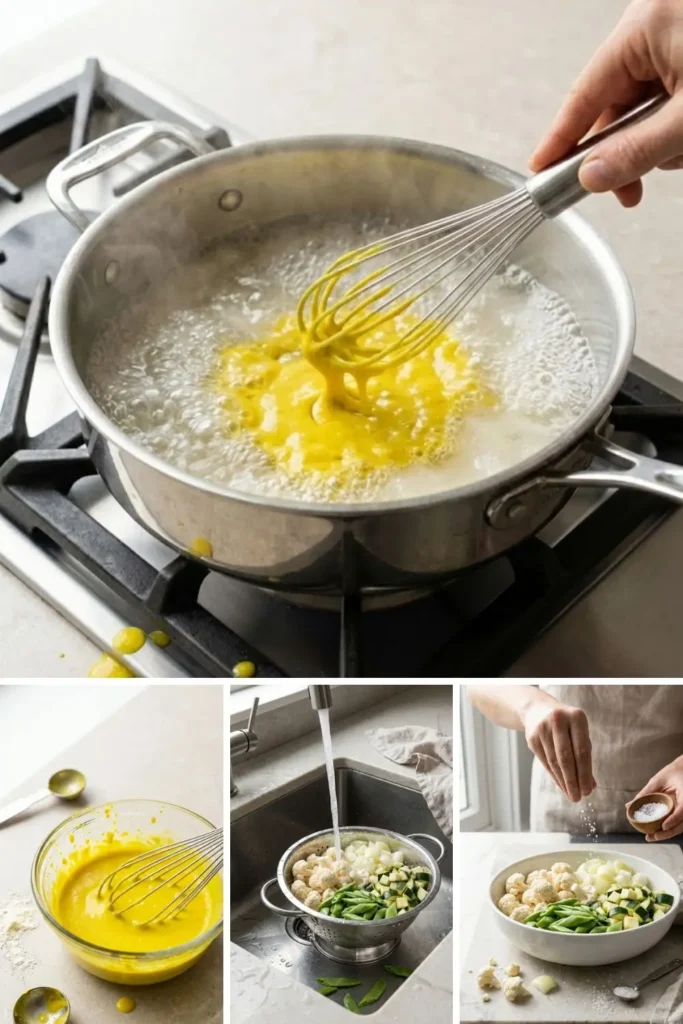
- Prepare the vegetables: Cut the cauliflower into very small florets (bite-sized). Chop the onions, slice the beans, and dice the courgettes. Place all the prepared vegetables into a large non-metallic bowl.
- The Salting Step: Sprinkle the salt over the vegetables and toss well to coat. Cover the bowl with a tea towel and leave it in a cool place for 24 hours. This draws out the water from the vegetables so they stay crisp in the jar.
- Rinse and drain: After 24 hours, drain the salty water from the bowl. Rinse the vegetables thoroughly under cold running water to remove the excess salt. Drain well in a colander.
- Make the paste: In a small bowl, mix the flour, mustard powder, turmeric, and ginger. Add a splash of the vinegar (about 4–5 tablespoons) and mix to a smooth, bright yellow paste.
- Dissolve the sugar: Pour the remaining vinegar and the sugar into a large stainless steel preserving pan. Heat gently, stirring until the sugar has completely dissolved.
- Thicken the sauce: Bring the vinegar to a boil. Pour in the spice paste, stirring constantly with a whisk to prevent lumps. Simmer for 3–4 minutes until the sauce has thickened and is smooth.
- Cook the vegetables: Add the well-drained vegetables to the pan. Stir well to coat them in the yellow sauce. Bring back to a simmer and cook gently for just 5–10 minutes. Do not overcook; the vegetables should still be firm and crunchy.
- Pot and seal: Spoon the hot Piccalilli into warm, sterilized jars, ensuring the vegetables are covered by the sauce. Seal immediately with vinegar-proof lids. Label and store.
Recipe Tips
- Vinegar choice: Mary recommends distilled malt vinegar (clear vinegar) rather than brown malt vinegar. This ensures the turmeric color shines through as a bright yellow, rather than a muddy brown.
- Vegetable size: Cut the vegetables small. Piccalilli is meant to be spooned onto a plate or sandwich, and large chunks of cauliflower are difficult to eat.
- Don’t skip the salt: If you skip the 24-hour salting stage, the water inside the vegetables will leak out into your sauce later, making the Piccalilli watery and diluting the flavor.
- Maturation: While you can eat it after a week, Piccalilli improves significantly if left to mature in a cool, dark place for 1 month. The vinegar mellows and the spices infuse the vegetables.
What To Serve With Mary Berry Piccalilli
This tangy pickle cuts through rich, fatty foods.
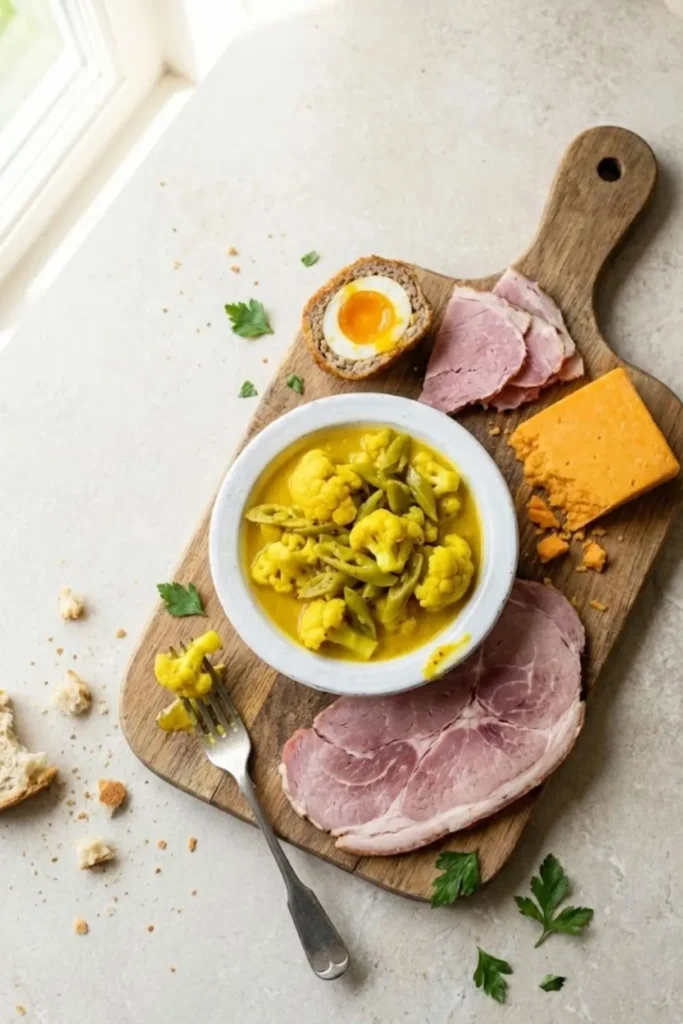
- Ham Sandwiches: The classic British pairing.
- Pork Pie: Essential for a ploughman’s lunch.
- Cold Cuts: Serve with sliced gammon or beef.
- Scotch Eggs: Adds a zesty kick to the picnic staple.
- Cheese Board: Especially good with sharp Cheddar.
How To Store Mary Berry Piccalilli
- Store (Unopened): Store jars in a cool, dark cupboard for up to 1 year.
- Store (Opened): Once opened, keep the jar in the refrigerator and consume within 6–8 weeks.
- Freeze: Do not freeze.
Mary Berry Piccalilli Nutrition Facts
- Calories: 45kcal
- Protein: 1g
- Carbohydrates: 10g
- Fat: 0g
- Saturates: 0g
- Sugar: 9g
- Salt: 0.2g
Nutrition information is estimated per tablespoon (approx. 20g).
FAQs
Can I use cornflour instead of plain flour?
Yes, you can use cornflour (cornstarch) if you need it to be gluten-free. It gives a slightly glossier finish.
Why is my sauce runny?
If the sauce is runny, either the vegetables weren’t drained enough, or the sauce wasn’t boiled long enough after adding the flour paste. It usually thickens slightly as it cools.
Can I use cider vinegar?
Yes, cider vinegar works well and adds a fruity note, though the color may be slightly less vibrant than with distilled white vinegar.
Try More Recipes:
- Mary Berry Pork Tenderloin with Mushroom Cream Recipe
- Mary Berry Royal Icing Recipe
- Mary Berry Sage and Onion Stuffing Recipe
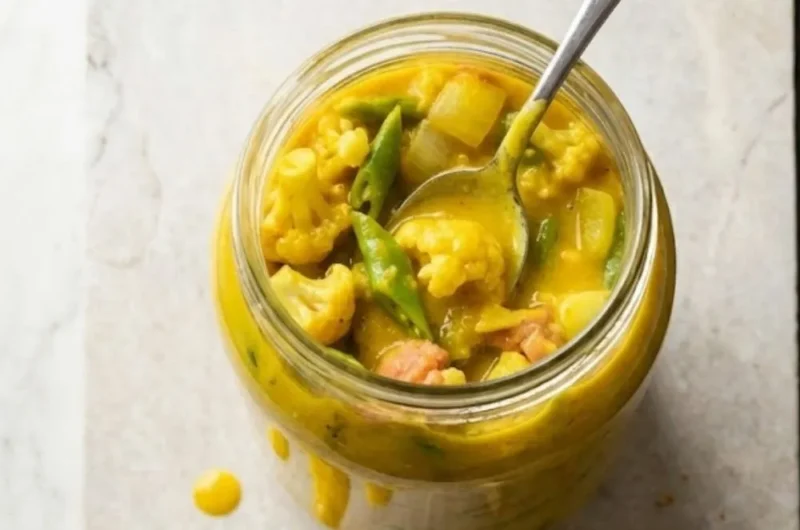
Mary Berry Piccalilli Recipe
Course: Side DishCuisine: BritishDifficulty: Easy4
servings30
minutes15
minutes45
kcalA crunchy, vibrant yellow mustard pickle packed with cauliflower, onions, and beans, traditionally served with cold meats and cheese.
Ingredients
1 cauliflower, florets
450g onions, chopped
250g runner beans, sliced
50g salt
900ml distilled vinegar
450g sugar
50g flour
25g mustard powder
25g mustard powder
2 tsp ginger
Directions
- Toss vegetables in salt; leave for 24 hours.
- Rinse vegetables thoroughly and drain.
- Mix flour, mustard, turmeric, ginger, and splash of vinegar to a paste.
- Dissolve sugar in remaining vinegar in a pan.
- Whisk paste into hot vinegar; thicken.
- Add vegetables and simmer for 5–10 minutes (keep crisp).
- Pot into sterilized jars.
Notes
- Keeping the cooking time short (5-10 minutes) once the vegetables are added is crucial; you want to heat them through to sterilize them, but retain their raw “snap.”
- The turmeric is responsible for the signature neon-yellow color of Piccalilli; be careful as it will stain wooden spoons and clothes instantly.
- Using a non-reactive pan (stainless steel or enamel) is essential when boiling vinegar, as aluminum or copper will react with the acid and give the pickle a metallic taste.